Splitting land allows property owners to divide a single parcel into two or more legally recognized lots. Many owners choose to split land in the USA to sell part of their property, build additional homes, increase land value, or create new investment opportunities. A successful land division requires careful planning and compliance with local regulations.
The process to split land in the USA typically involves zoning verification, utility review, professional surveys, subdivision drawings, government approvals, and final plat recording. Understanding each step before starting can help prevent delays, reduce costs, and improve approval success. This guide explains how to split land in the USA, including zoning requirements, subdivision plans, approval timelines, costs, and common mistakes to avoid.
What Does It Mean to Split Land in the USA?
To split land in the USA means legally dividing one property into two or more separate lots. Also known as parcel division, lot splitting, or subdivision, this process creates new parcels with their own legal descriptions and parcel numbers. Once approved, each lot can be sold, developed, or transferred independently. Property owners decide to split land in the USA for several reasons, including:
- Building additional homes
- Selling excess land
- Increasing property value
- Creating investment opportunities
- Estate planning and inheritance purposes
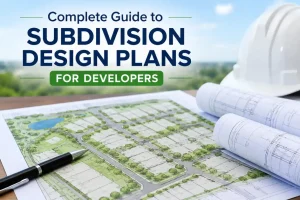
Understanding the full Subdivision Design Plans process helps property owners ensure their land division complies with zoning and planning requirements from the start.
Step 1: Check Your Zoning
Before beginning the land division process, verify that your property qualifies for subdivision under local zoning regulations. Local approval often depends on Zoning Permit and How It Affects Your Permit rules, which determine whether a parcel can legally be subdivided. Key questions include:
- What is the minimum lot size requirement?
- Does each new parcel meet frontage requirements?
- Are there setback restrictions?
- Does the property fall within an overlay district?
- Are there environmental or floodplain limitations?
Zoning compliance is one of the first factors reviewed by planning departments. If your property does not meet local zoning requirements, your application to split land in the USA may be denied regardless of the quality of your subdivision plans.
Understanding Local Subdivision Regulations
Anyone planning to split land in the USA must also comply with local subdivision regulations in addition to zoning laws. Most cities and counties have specific requirements that control how land can be divided. These regulations may address:
- Road access requirements
- Utility availability
- Easements
- Stormwater management
- Public infrastructure improvements
- Lot design standards
Reviewing local subdivision ordinances early can help avoid costly redesigns later in the approval process. In many jurisdictions, a Plat Map and Property Record Documentation is required to officially record new parcel divisions and update legal land records.
Step 2: Check Utility Availability
Before you split land in the USA, confirm that each newly created parcel can access essential utilities and public services. Most local authorities require every new lot to have adequate infrastructure before approving a subdivision. Verify the availability of:
- Water service
- Sewer connections or septic suitability
- Electrical service access
- Internet and communication infrastructure
- Legal road access
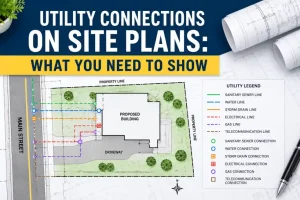
Many land division applications are delayed because utility service requirements are not addressed during initial planning. Utility access requirements are often similar to those found in Home Addition Site Plan Requirements, where service connections must be clearly shown on submitted plans.
Step 3: Get a Professional Land Survey
A professional boundary survey is a critical step when you split land in the USA. A licensed land surveyor establishes the legal framework for the proposed subdivision by accurately measuring the property and identifying any potential issues. The survey typically includes:
- Verification of property boundaries
- Identification of easements
- Location of existing structures
- Calculation of lot dimensions
- Establishment of new parcel boundaries
Accurate survey data forms the foundation of all subdivision drawings submitted for review. Without a professional survey, it can be difficult to split land in the USA successfully because planning departments rely on precise boundary information during the approval process.
Step 4: Prepare Subdivision Drawings
Subdivision drawings are among the most important documents in the approval process. These plans help planning departments evaluate whether the proposed split complies with zoning and development regulations. A complete Permit Drawing Package Guide ensures all required subdivision documents are prepared in a consistent and review-ready format. A complete subdivision package may include:
- Preliminary plat
- Site plan
- Utility layout
- Easement mapping
- Access plans
- Legal descriptions
- Improvement plans
Accurate drawings reduce correction requests and help reviewers process applications faster
Why Subdivision Drawings Are Important
Subdivision drawings provide a visual representation of how the property will be divided. They help reviewers verify:
- Lot dimensions
- Property boundaries
- Utility access
- Easements
- Setbacks
- Road frontage
- Compliance with local regulations
Well-prepared drawings improve reviewer confidence and significantly reduce approval delays.
Step 5: Planning Commission Review
Most land division applications require review by a planning commission, zoning board, or development department. The review process generally includes:
- Application submission
- Staff review
- Technical corrections
- Public hearings (if required)
- Final approval decision
Depending on the jurisdiction, approval timelines can range from several weeks to several months.
Step 6: Record the Final Plat
After receiving approval, the final subdivision plat must be recorded with the county recorder’s office. Recording officially creates the new parcels and updates public land records. Once recorded:
- Parcels can be sold or developed independently
- New parcel numbers are assigned
- Property ownership records are updated
How Much Does It Cost to Split Land in the USA?
Land division costs vary depending on location, parcel size, and local requirements. Property owners can estimate expenses early using a Site Plan Cost Calculator based on project type, complexity, and jurisdiction requirements. Typical expenses include:
| Service | Estimated Cost |
| Boundary Survey | $800–$3,000 |
| Subdivision Drawings | $300–$2,500 |
| Application Fees | $200–$2,000+ |
| Legal Services | $500–$5,000 |
| Utility Improvements | Varies |
| Road Improvements | Varies |
Many projects fall between $2,000 and $15,000 or more.
Common Reasons Land Split Applications Get Denied
Land division applications may be denied due to:
- Zoning violations
- Insufficient lot size
- Lack of utility access
- Road frontage deficiencies
- Environmental restrictions
- Easement conflicts
- Incomplete subdivision drawings
Addressing these issues before submission greatly improves approval chances.
Practical Permit Review Checklist
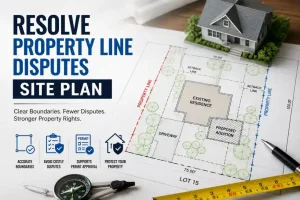
Before you submit your application, review the drawing as if you were the city plan reviewer. The plan should clearly show what already exists, what is being added, where the work will happen, and how the project fits within the property limits. For how to split land USA, the most important details are usually the property boundaries, accurate dimensions, setbacks, north arrow, project address, parcel information, and clear labels for existing and proposed work. These details help the reviewer understand the scope quickly and reduce avoidable correction comments.
- Confirm that the project address and owner information are correct.
- Check that proposed work is labeled separately from existing structures.
- Make sure setback distances are easy to read.
- Use consistent measurements across the site plan, floor plan, and any supporting drawings.
- Attach the plan in the format requested by your local building department.
How to Prepare Your Project Details
A better starting package usually creates a better final drawing. Gather your property address, a short description of the work, photos of the project area, rough measurements, and any instructions from the permit office. If you already have an old survey, plot plan, contractor sketch, or HOA document, include it during the order process. Even when those files are not perfect, they give the drafting team useful context and help prevent missing information.
For homeowners, the goal is not to create a complicated architectural package. The goal is to give the building department a clear, scaled, and easy-to-review drawing. That is why How to Split Land in the USA: A Complete Guide should focus on accuracy, simple labels, and the specific details your jurisdiction asks for. A clean plan is often easier for the reviewer to approve than a crowded drawing with unnecessary notes.
Common Mistakes to Avoid Split Land
Many permit delays happen because small details are missing. Common issues include using screenshots instead of scaled drawings, leaving out setbacks, showing old structures that no longer exist, forgetting easements, or submitting a plan that does not match the permit application. Another common mistake is using a generic plan when the city requires project-specific information. A permit-ready drawing should match your address, your project, and your local review requirements.
Ready to Get Your Permit-Ready Plans?
24-hour turnaround · Starting at $79 · Unlimited revisions · 100% money-back guarantee
Frequently Asked Questions
How much does it cost to split land?
Total costs vary widely but typically include: surveying ($800–$3,000), subdivision drawings ($300–$2,500), application fees ($200–$2,000+), and any required improvements (roads, utilities). Total costs commonly range from $2,000 to $15,000+ depending on complexity and location.
How long does it take to split land?
Simple lot splits in cooperative jurisdictions can take 3–6 months. Complex subdivisions requiring infrastructure improvements can take 1–3 years.
Can I split land in any state?
Yes, but requirements vary significantly by state and local jurisdiction. Some areas have restrictive subdivision ordinances; others are straightforward. Research your specific county’s requirements early.
Do I need a real estate attorney for a land split?
It’s strongly recommended. A real estate attorney can review title, prepare legal descriptions, and ensure the deed transfer is handled correctly when the new parcels are created and sold.
Related Permit Resources
Related Blog Guides