Homeowners planning renovations, structural upgrades, additions, or property improvements often focus on budgets, contractors, materials, and design ideas. However, one critical step is frequently overlooked before construction begins: verifying permit requirements.
Fortunately, modern technology has made permit research easier than ever. Today, most cities and counties offer digital permit systems that allow homeowners to review permit requirements, zoning restrictions, permit applications, inspection schedules, and approval procedures without visiting a government office.
Learning how to check building permit requirements online helps homeowners avoid unnecessary risks while ensuring their projects comply with local regulations. Whether you’re planning a kitchen remodel, room addition, deck construction, garage conversion, or electrical upgrade, understanding permit requirements before construction begins is essential.
This guide explains everything homeowners need to know about checking building permit requirements online, including where to find information, how online permit systems work, common permit requirements, zoning considerations, and best practices for successful project approval.
Why Checking Building Permit Requirements Matters
Building permits are much more than government paperwork. They exist to ensure that construction projects comply with local building codes, zoning laws, environmental regulations, and safety standards.
Permit reviews help verify:
- Structural safety
- Electrical code compliance
- Plumbing safety standards
- Fire protection requirements
- Energy efficiency regulations
- Zoning compliance
- Property use restrictions
- Confirming that our project fulfils all building permit requirements
Checking building permit requirements before construction begins helps homeowners:
- Avoid building code violations
- Prevent stop-work orders
- Reduce permit application delays
- Maintain insurance coverage
- Protect property value
- Verify contractor accountability
- Simplify future property sales
Many homeowners assume permits are only required for large construction projects. In reality, even relatively small renovations may require approval depending on local regulations.
What Is an Online Permit Search?
An online permit search is a digital service provided by local governments that allows homeowners and property owners to access permit-related information through a building department website or city permit portal.
Most online permit systems provide access to:
- Building permit requirements
- Residential permit lookup tools
- Permit application forms
- Property permit records
- Permit status tracking
- Inspection scheduling
- Zoning information
- Construction guidelines
These digital services eliminate the need for homeowners to visit municipal offices and provide immediate access to critical permit information.
Learning building permit requirements online allows homeowners to make informed construction decisions before investing time and money into a project.
Benefits of Checking Building Permit Requirements Online
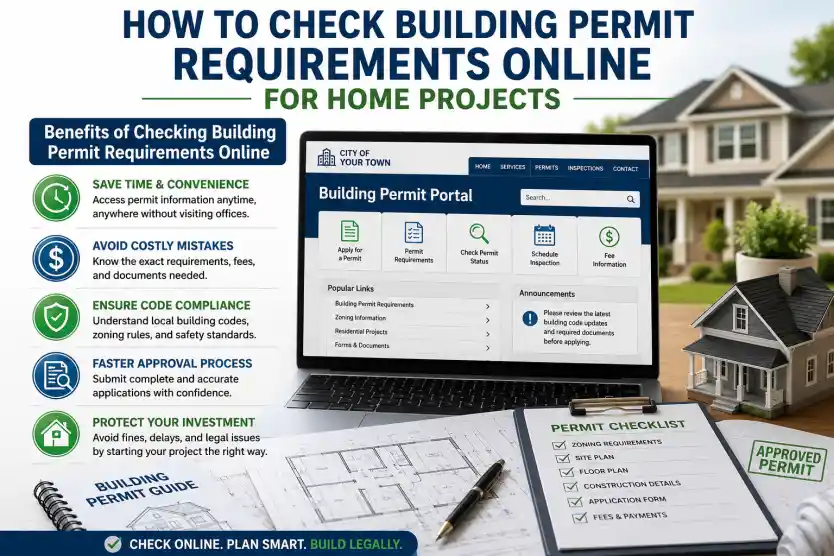
Modern permit portals offer significant advantages over traditional permit research methods.
Benefits include:
- Instant access to permit information
- Faster project planning
- Online permit applications
- Digital document submissions
- Real-time permit tracking
- Easy access to fee schedules
- Convenient inspection scheduling
- Improved communication with permit officials
Because permit information is available 24 hours a day, homeowners can conduct permit research whenever it is most convenient.
Projects That Commonly Require Permits
Before starting construction, homeowners should understand which projects frequently require approval.
Structural Modifications
Structural projects almost always require permits because they affect the integrity and safety of the home.
Common examples include:
- Room additions
- Wall removal
- Garage conversions
- Foundation repairs
- Roof structure modifications
- Basement finishing
- Second-story additions
Because these projects impact structural stability, building departments carefully review construction plans before granting approval.
Electrical Upgrades
Electrical work typically requires permits to ensure compliance with current safety standards.
Examples include:
- Electrical panel replacements
- Circuit upgrades
- New wiring installations
- Generator hookups
- EV charging stations
- Whole-home electrical renovations
Electrical permits help reduce fire risks and ensure safe installations.
Plumbing Improvements
Plumbing systems are regulated to protect public health and safety.
Common permit-required plumbing projects include:
- Water heater replacements
- Pipe replacements
- Sewer line modifications
- Bathroom remodels
- Kitchen plumbing upgrades
- New fixture installations
Permit reviews ensure plumbing systems meet applicable code requirements.
Exterior Construction
Outdoor improvements frequently trigger building permit requirements.
Examples include:
- Deck construction
- Patio covers
- Swimming pools
- Detached garages
- Large storage sheds
- Fence installations
- Outdoor kitchens
Because permit rules vary by location, homeowners should always verify local requirements before beginning work.
Home Projects That May Not Require Permits
Not every home improvement project requires government approval.
Permit-exempt projects often include:
- Interior painting
- Flooring replacement
- Cabinet replacement
- Countertop installation
- Wallpaper installation
- Minor landscaping
- Basic repairs
However, homeowners should still verify local regulations because exemptions vary by municipality.
How to Check Building Permit Requirements Online
Following a structured permit verification process can help homeowners avoid mistakes and improve project planning while checking building permit requirements.
Visit Your Local Building Department Website
The first step is locating your city or county building department website.
Look for sections labeled:
- Building permits
- Residential permits
- Planning and zoning
- Permit services
- Development services
- Online permit portal
Official government websites provide the most accurate and up-to-date permit information.
Search Your Property Address
Many residential permit lookup systems allow users to search by property address.
A property search may reveal:
- Existing permits
- Previous approvals
- Open code violations
- Historical permit records
- Property zoning classifications
This information is especially useful for homeowners planning major renovations, purchasing a property or checking the building permit requirements.
Review Project-Specific Permit Requirements
Once you identify your project type, review all applicable permit regulations.
Pay close attention to:
- Permit thresholds
- Required documents
- Inspection schedules
- Engineering requirements
- Contractor requirements
- Energy code standards
Understanding requirements before submission can significantly reduce approval delays.
Verify Zoning Restrictions
Permit approval often depends on zoning compliance.
Many municipalities provide online zoning maps that allow homeowners to verify:
- Property zoning classifications
- Building height limits
- Setback requirements
- Lot coverage restrictions
- Accessory structure regulations
- Parking requirements
- Land-use limitations
Even projects that meet building code requirements may be denied if they violate zoning regulations.
Download Permit Forms and Documents
Most permit portals provide downloadable forms and application packages.
Common documents include:
- Permit applications
- Site plan requirements
- Floor plan templates
- Construction guidelines
- Engineering requirements
- Inspection procedures
Downloading these documents early helps homeowners prepare complete applications.
Review Permit Fees
Most municipalities publish permit fee schedules online.
Permit costs may vary based on:
- Project size
- Construction value
- Square footage
- Permit type
- Review complexity
Understanding permit fees during the planning stage helps homeowners avoid unexpected expenses.
Verify Contractor Requirements
Many permit applications require licensed contractors.
Online permit resources often provide information regarding:
- Contractor licensing
- Insurance requirements
- Business registration
- Trade certifications
Verifying contractor qualifications before submission can prevent unnecessary delays.
Contact Permit Officials for Clarification
While online resources provide valuable information, some projects involve unique circumstances.
Homeowners should contact permit officials when dealing with:
- Structural modifications
- Historic properties
- Large additions
- Complex site conditions
- Multi-system renovations
Direct communication can help prevent misunderstandings and improve approval timelines.
Common Mistakes Homeowners Make
Many permit-related issues occur because homeowners rely on assumptions or incomplete information.
Common mistakes include:
- Assuming permits are unnecessary
- Trusting unofficial online sources
- Ignoring zoning restrictions
- Hiring unlicensed contractors
- Starting construction before approval
- Missing inspections
- Using outdated permit forms
- Overlooking HOA requirements
Avoiding these mistakes can save significant time and money throughout a project.
How Permit Compliance Protects Property Value
Permit compliance affects much more than construction approval.
Properly permitted improvements can:
- Increase buyer confidence
- Improve appraisal accuracy
- Reduce lender concerns
- Support insurance claims
- Simplify future property sales
- Document legal improvements
Unpermitted work often creates challenges during real estate transactions and can reduce marketability. Maintaining organized permit records helps protect both current and future property interests.
Benefits of Modern Digital Permit Systems
Technology has transformed how homeowners interact with local building departments.
Today’s permit systems commonly offer:
- Digital permit applications
- Online fee payments
- Virtual inspections
- Permit status tracking
- Electronic document uploads
- Automated notifications
- Real-time review updates
These tools simplify the process of learning how to check building permit requirements online while improving transparency and convenience.
Best Practices for Homeowners
To ensure a smooth permit process, homeowners should:
- Check permit requirements before purchasing materials
- Verify zoning restrictions early
- Use official government websites
- Maintain copies of permit documents
- Schedule inspections on time
- Confirm contractor licensing
- Communicate with permit officials when necessary
- Keep records of all approvals and inspections
Following these best practices can significantly reduce project delays and compliance issues.
Why Choose Us
We are committed to providing practical, and easy-to-understand guidance that helps homeowners navigate permit requirements with confidence. We prioritize accurate, experience-driven guidance that helps homeowners understand building permit requirements and make informed construction decisions.
Our content focuses on:
- Residential construction best practices
- Permit compliance education
- Reliable research-based information
- Clear explanations of building regulations
- Practical strategies for avoiding permit mistakes
Whether you’re planning a small renovation, any residential plan or a major home addition, our goal is to help you make informed decisions and avoid costly setbacks.
Conclusion
Learning how to check building permit requirements online is one of the most important steps homeowners can take before beginning any renovation or construction project. Proper permit verification helps prevent delays, avoid legal complications, reduce costs, and improve overall project success.
By using official online permit search tools, reviewing building permit requirements carefully, verifying zoning regulations, and preparing required documentation before construction begins, homeowners can move forward with confidence.
A proactive approach to permit research not only improves compliance but also protects property value, simplifies future transactions, and contributes to a safer and more successful home improvement experience.