Starting a construction or renovation project without Checking Permit Requirement or verifying permit requirements can lead to expensive consequences. Many homeowners assume they can begin work immediately, only to encounter failed inspections, project delays, fines, or legal issues later. Whether you’re planning a home addition, remodeling a kitchen, replacing a roof, or upgrading electrical systems, checking permit requirements first is one of the most important steps in the planning process.
Understanding local building regulations before construction begins helps homeowners avoid unnecessary risks, maintain compliance, and protect their investment. Taking the time to verify permit requirements can save significant time, money, and frustration throughout the project lifecycle.
Why Check Permit Verification Should Always Come First
Building permits exist to ensure that construction projects comply with local safety standards, zoning regulations, and building codes. These requirements are designed to protect homeowners, neighbors, and communities by ensuring that work is completed safely and correctly.
Many property owners mistakenly believe that permits are only required for large construction projects. In reality, even smaller renovations may require approval depending on local regulations.
Failing to verify permit requirements before construction can result in:
- Costly reconstruction work
- Permit violation penalties
- Delayed project timelines
- Insurance claim complications
- Reduced property value
- Legal compliance issues
Checking permit requirements early helps homeowners avoid these problems and move forward with confidence.
Common Construction Mistakes Caused by Ignoring Permits
One of the most common mistakes homeowners make is assuming a permit is unnecessary without confirming local requirements.
Frequent permit-related mistakes include:
- Starting construction without approval
- Hiring contractors who fail to obtain permits
- Ignoring zoning restrictions
- Missing required inspections
- Using outdated permit information
- Overlooking structural review requirements
Building regulations vary significantly from one municipality to another. Even experienced contractors can occasionally overlook local permit requirements, making independent verification essential.
Projects That Commonly Require Permit Approval
Many residential projects require permits, even when they appear relatively minor. Local authorities regulate these projects to ensure compliance with safety and construction standards.
Projects that often require permits include:
- Room additions
- Roof replacements
- Electrical panel upgrades
- Plumbing modifications
- HVAC installations
- Deck construction
- Fence installation
- Structural wall removal
- Garage conversions
- Water heater replacements
Before beginning any of these projects, homeowners should confirm permit requirements with their local building department.
Financial Risks of Skipping Permit Requirements
Failing to obtain necessary permits can create significant financial consequences. In many jurisdictions, building officials may issue stop-work orders or require completed work to be removed if it was performed without approval.
Potential financial risks include:
- Municipal fines
- Reconstruction expenses
- Contractor delays
- Failed inspections
- Insurance disputes
- Reduced property resale value
In many cases, correcting unpermitted work costs substantially more than obtaining permits from the beginning.
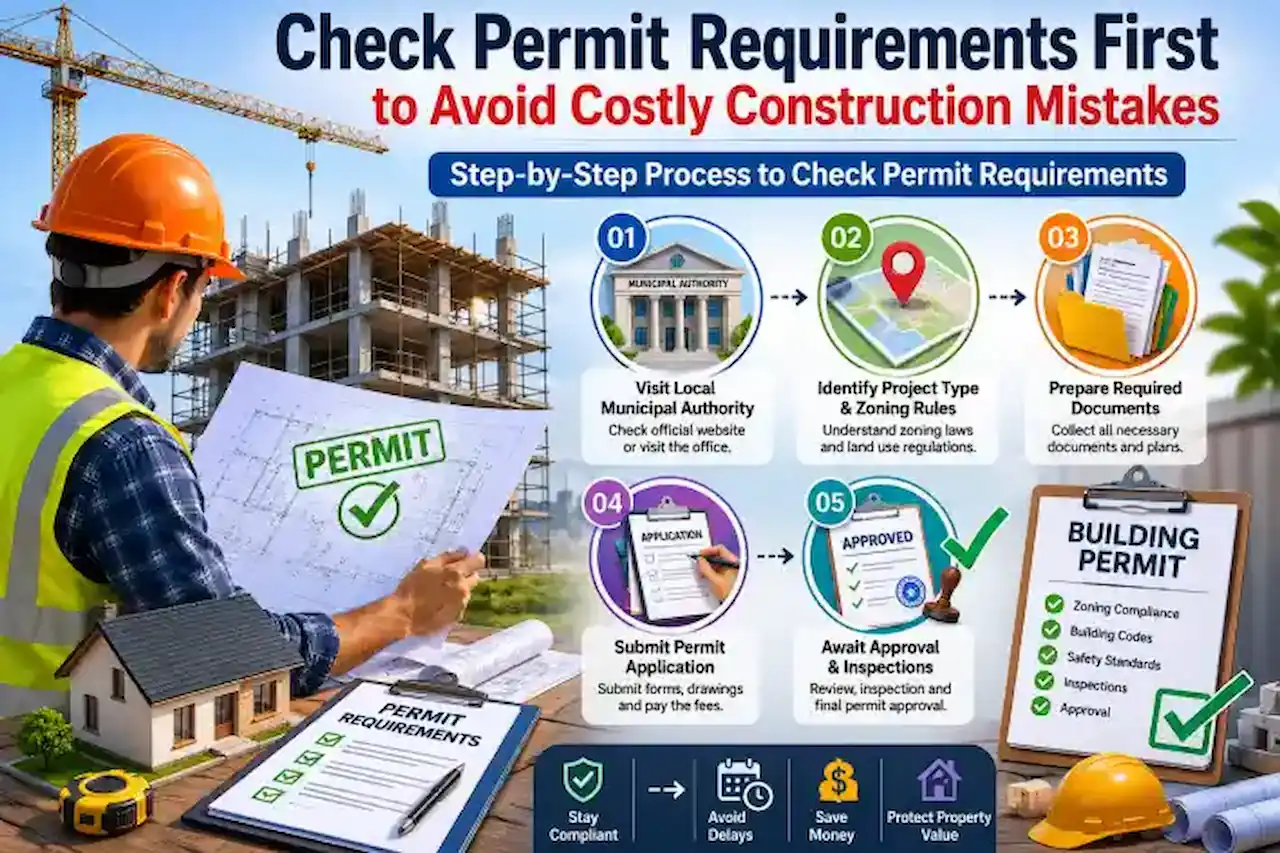
Step-by-Step Process to Check Permit Requirements
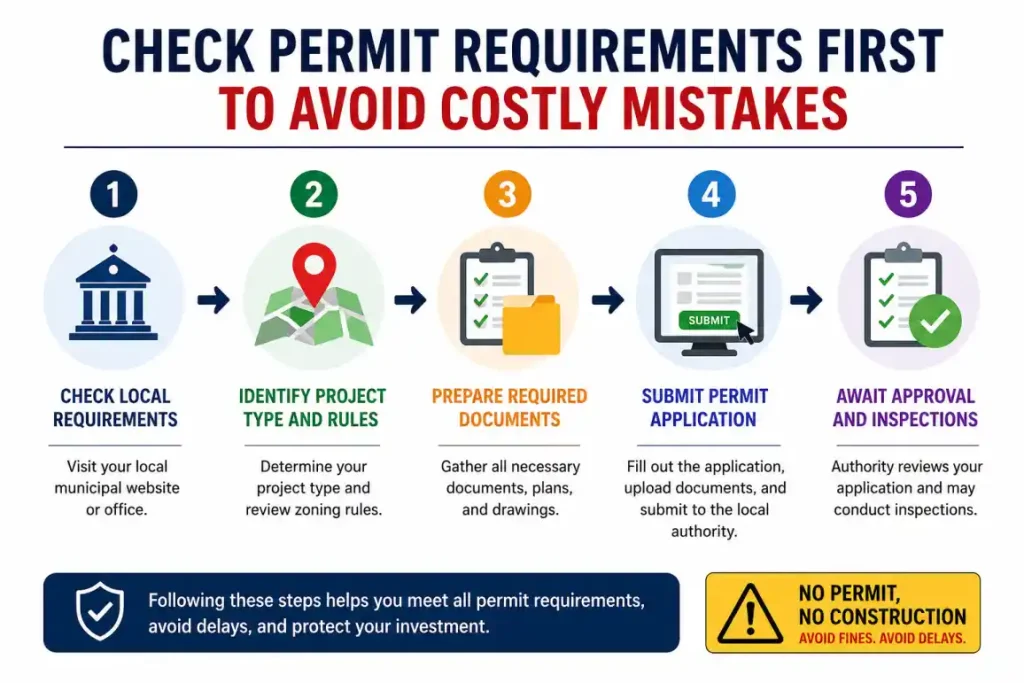
Understanding Permit Requirements before starting any construction project is essential to avoid delays, fines, and legal complications. Following a structured process helps ensure your project meets all local regulations from the beginning.
1. Visit Local Municipal Authority or Official Website
The first step is to check the official source of Permit Requirements in your area. Every city or municipal authority has its own building regulations and approval system.
- Visit the local development authority office or official website
- Look for construction, zoning, and building control sections
- Identify whether your project needs a residential, commercial, or special construction permit
This step ensures you are working with accurate and updated legal information.
2. Identify Project Type and Zoning Rules
Different projects have different requirements based on zoning laws and land use classifications.
- Residential construction (houses, apartments)
- Commercial buildings (shops, offices)
- Industrial structures (factories, warehouses)
You must confirm:
- Whether your land is approved for construction
- Height restrictions and setback rules
- Land use permissions (residential, commercial, mixed-use)
Ignoring zoning rules is one of the most common causes of permit rejection.
3. Prepare Required Documents
Once you understand the Permit Requirements, gather all necessary documents before applying. Missing paperwork can delay approval significantly.
- Site plan or plot layout
- Architectural drawings of the structure
- Structural engineering design reports
- Proof of property ownership or registry documents
- Contractor registration or license (if applicable)
- Environmental clearance (for large or sensitive projects)
Proper documentation increases approval speed and reduces revisions.
4. Submit Permit Application
After preparing documents, submit your application according to the local authority’s process.
- Fill out the official permit application form
- Attach all required drawings and documents
- Pay the applicable processing fees
- Submit physically or through an online portal (if available)
Make sure all details match exactly with your submitted plans to avoid rejection.
5. Await Approval and Inspections
Once submitted, the authority will review your application against the Permit Requirements.
- Officials verify zoning compliance and structural safety
- You may receive queries or revision requests
- In some cases, site inspections are conducted
- Approval is granted only after full compliance verification
Construction should not begin until final approval is officially issued.
Documents Typically Required for Permit Approval
To meet standard Permit, most construction projects require a set of essential documents. These ensure the project is legally, structurally, and environmentally compliant.
1. Site Plan / Plot Plan
A detailed site plan shows the exact layout of the property. It includes:
- Building location on the plot
- Setback distances from boundaries
- Access roads and surrounding structures
This is a core requirement in nearly all permit applications.
2. Architectural Drawings
These drawings present the design and layout of the building. They typically include:
- Floor plans
- Elevations and sections
- Room dimensions and usage details
Authorities use these to ensure the design follows building codes and safety standards.
3. Structural Design Details
Structural documents ensure the building can safely withstand loads and environmental conditions.
- Foundation design
- Beam, column, and slab details
- Material specifications
These are often reviewed by certified engineers as part of Permit Requirements.
4. Ownership Proof
Legal ownership documents confirm that the applicant has the right to build on the land.
- Property deed or registry papers
- Tax payment records
- Land transfer documents (if applicable)
Without ownership proof, permits are usually rejected immediately.
5. Contractor License Details
If a contractor is involved, authorities require verification of their credentials.
- Valid contractor registration or license
- Professional certification details
- Previous project references (in some cases)
This ensures that qualified professionals are handling construction work.
6. Environmental Clearance (If Needed)
For larger or environmentally sensitive projects, additional approval may be required.
- Impact assessment reports
- Waste management plans
- Environmental safety compliance documents
This ensures the project does not harm the surrounding environment.
How Permit Requirements Protect Property Owners
Building permits are not simply administrative paperwork. They provide important protections for homeowners by ensuring construction work meets accepted safety standards.
Permit inspections can identify:
- Unsafe electrical wiring
- Structural deficiencies
- Plumbing code violations
- Ventilation problems
- Fire safety concerns
- Drainage issues
Viewing inspections as a quality-control process rather than an obstacle helps homeowners understand the value permits provide.
Why Online Permit Search Tools Are Important
Many local governments now offer digital permit systems that allow homeowners to research permit requirements before construction begins.
Online permit portals often allow users to:
- Search permit requirements
- Review zoning regulations
- Submit permit applications
- Access building code information
- Track permit status
- Schedule inspections
These tools make it easier for property owners to gather accurate information and avoid relying on outdated or unofficial sources.
Zoning Regulations Can Create Hidden Challenges
Even when a project meets construction standards, zoning regulations may affect approval.
Zoning laws commonly regulate:
- Property setbacks
- Building height limitations
- Lot coverage percentages
- Accessory structure placement
- Parking requirements
Homeowners who review zoning restrictions early in the planning process can avoid costly redesigns and approval delays later.
Contractor Responsibility Does Not Replace Homeowner Verification
Many homeowners assume contractors automatically manage all permit requirements. While contractors often assist with permit applications, property owners remain responsible for ensuring permits are properly obtained.
Homeowners should always:
- Request copies of permits
- Verify permit approval status
- Confirm inspection schedules
- Review contractor licensing
- Keep project documentation
Taking an active role in permit verification improves accountability and helps prevent compliance issues.
Long-Term Property Value Depends on Permit Compliance
Permit-approved construction helps protect property value by creating a documented record that improvements meet local code requirements.
During future property sales, buyers, lenders, and inspectors frequently review:
- Permit history
- Inspection approvals
- Compliance records
- Renovation documentation
Unpermitted work can create complications during real estate transactions, mortgage approvals, and insurance evaluations.
Maintaining complete permit records helps improve buyer confidence and supports smoother property sales.
Best Practices for Checking Permit Requirements First
To avoid permit-related problems, homeowners should:
- Contact the local building department before planning construction
- Review zoning regulations early
- Use official online permit portals
- Confirm permit requirements in writing when possible
- Verify contractor licensing and permit responsibilities
- Keep copies of all permits and inspection reports
Following these steps can significantly reduce project risks and improve overall construction outcomes.
Why Choose Us
We provide reliable, experience-based guidance that helps homeowners understand permit requirements and construction compliance requirements before projects begin.
- Accurate permit and construction regulation information
- Practical guidance based on industry standards
- Clear explanations for homeowners and contractors
- Helpful resources focused on compliance and planning
- High-quality content designed for trust and usability
- Information that supports smarter construction decisions
Conclusion
Checking Permit Requirements before starting any construction or renovation project is one of the most effective ways to avoid costly mistakes. Early permit verification helps homeowners prevent delays, reduce financial risks, maintain compliance, and protect long-term property value. By understanding local building regulations, zoning restrictions, and inspection requirements before construction begins, homeowners can complete projects more efficiently and with greater confidence.
Beyond just compliance, proper planning at this stage also helps you make informed decisions about budgeting, timelines, and professional support. A well-prepared permit process reduces the chances of unexpected revisions, stop-work orders, or redesign expenses, allowing your project to move forward smoothly from concept to completion.
We also offer flexible packages and pricing options based on project size and complexity. Whether you’re planning a small home renovation or a large-scale development, we provide tailored solutions that fit your budget while maintaining full compliance with building regulations.