
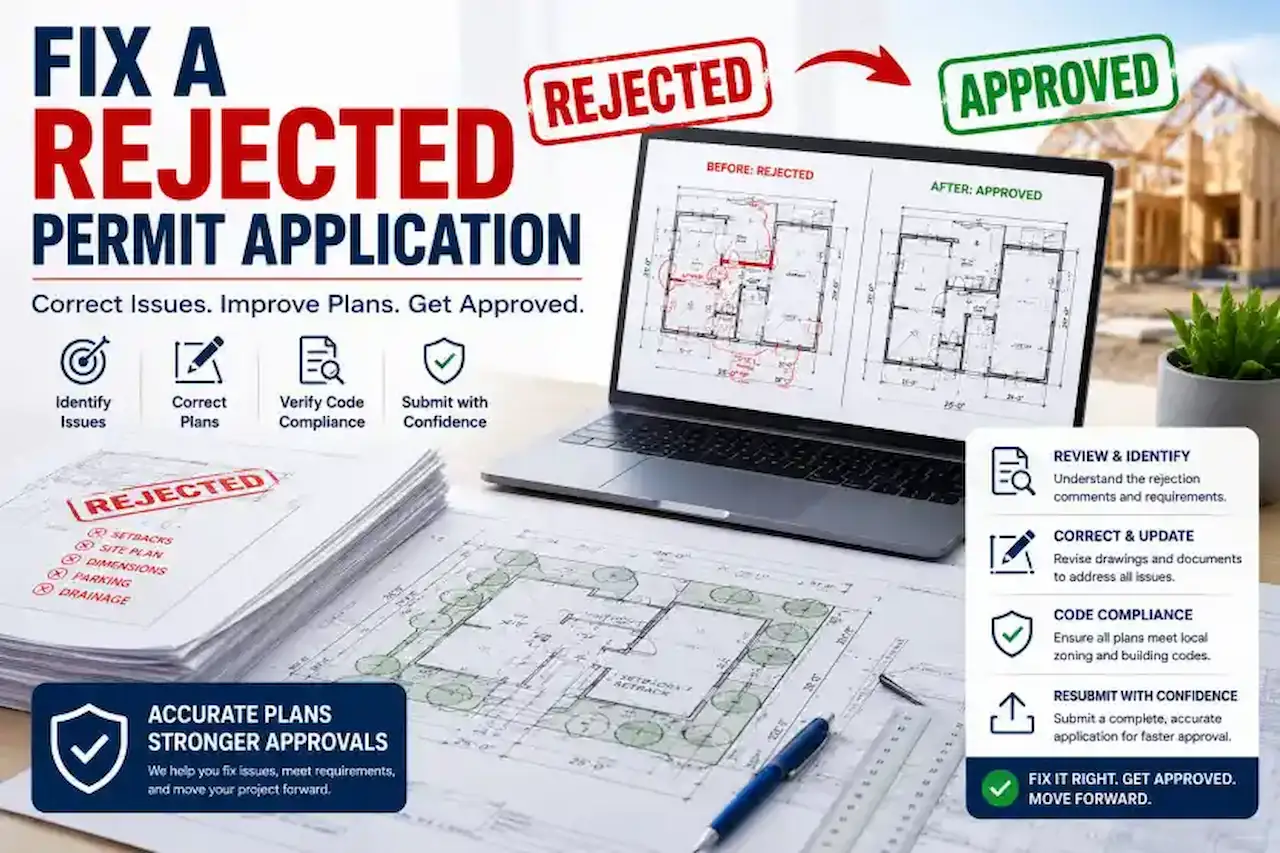
Receiving a permit rejection can be frustrating, especially when your construction schedule, contractor availability, and project budget are already planned. However, a rejected application does not necessarily mean your project has been denied permanently. In many cases, the local building department simply requires corrections or additional information before issuing approval.
Knowing how to Fix a Rejected Permit is essential for keeping your project on track. By carefully reviewing the correction notice, addressing every reviewer comment, and submitting accurate revised documents, you can significantly improve your chances of approval during the next review cycle.
At Permit For Site Plan, we help homeowners, contractors, architects, and developers Fix a Rejected Permit by preparing accurate site plans, revised permit drawings, and code-compliant documents that meet local building and zoning requirements. With a well-organized resubmission, many rejected permit applications are approved without unnecessary delays.
Understanding Why Permit Applications Get Rejected
Before you can Fix a Rejected Permit, it’s important to understand why the application was rejected in the first place. During the review process, city officials carefully examine permit documents to verify compliance with zoning regulations, building codes, safety standards, and local permit requirements. If they identify missing information, technical errors, or code violations, they will typically issue correction comments instead of approving the application. Fortunately, most permit rejections are caused by issues that can be corrected before resubmitting the application. Understanding the reason for the rejection helps you focus on the necessary revisions and avoid repeating the same mistakes. Some of the most common reasons permit applications are rejected include:
- Incorrect or incomplete site plans
- Missing permit documents
- Zoning regulation violations
- Building code compliance issues
- Incomplete construction details
- Incorrect property measurements
- Property information errors
- Poor-quality or unclear drawings
Carefully reviewing the correction notice is the first step to Fix a Rejected Permit successfully. Once you understand the city’s requirements, you can prepare accurate revisions, update your permit documents, and submit a stronger application that has a much better chance of approval.
Review the Rejection Notice Carefully
One of the most important steps to Fix a Rejected Permit is carefully reviewing the rejection notice before making any changes. Many applicants immediately begin revising their plans without fully understanding the city’s comments, which often results in incomplete corrections and additional review cycles.
City permit reviewers usually provide detailed notes explaining why the application was rejected and what must be corrected before approval can be granted. Taking the time to understand each comment allows you to prepare accurate revisions and submit a stronger application. Most rejection notices include feedback from multiple city departments, each responsible for reviewing different aspects of the project.
Planning Department Comments
The Planning Department primarily reviews whether your project complies with local zoning regulations and land-use requirements. Common comments may relate to:
- Zoning compliance
- Property setback requirements
- Lot coverage limits
- Parking requirements
- Land-use regulations
Addressing these issues correctly helps ensure your project meets local planning standards and reduces the likelihood of additional corrections.
Building Department Comments
The Building Department focuses on the safety and construction aspects of your project. Reviewers check whether the plans comply with current building codes and structural requirements. Their comments often involve:
- Structural safety
- Building code compliance
- Accessibility requirements
- Fire safety standards
- Construction specifications
Making these corrections is essential to Fix a Rejected Permit and move your application toward approval.
Engineering Department Comments
For projects involving site development or utility work, the Engineering Department may also review your application. Their goal is to verify that the project meets engineering and infrastructure requirements. Common engineering comments include:
- Drainage systems
- Utility placement
- Grading requirements
- Stormwater management
- Infrastructure connections
Understanding comments from every reviewing department helps you develop a complete correction strategy. By addressing all reviewer feedback before resubmitting your application, you can Fix a Rejected Permit more efficiently and improve your chances of faster approval.
Correct Site Plan Errors Immediately
Site plans are one of the most critical documents in a permit application, and even minor inaccuracies can lead to permit rejection. If you’re trying to Fix a Rejected Permit, reviewing and correcting your site plan should be one of the first priorities. An accurate site plan allows city reviewers to verify that your project complies with zoning regulations, property boundaries, and local development standards. Depending on the correction notice, your revised site plan may need updates such as:
- Revising setback measurements
- Correcting property dimensions
- Updating utility locations
- Adjusting driveway placement
- Adding missing structures
- Correcting scale information
- Clarifying property boundaries
Professionally prepared site plans eliminate inconsistencies and provide reviewers with clear, accurate information. Correcting these errors early can help Fix a Rejected Permit more efficiently and reduce the chances of additional review comments.
Verify Zoning Compliance Before Resubmitting
Another essential step to Fix a Rejected Permit is verifying that your project complies with all local zoning regulations. Many applicants revise their drawings but overlook zoning violations, causing the application to be rejected again. Before resubmitting your permit application, carefully review your project to ensure it meets all applicable zoning requirements. This includes checking:
- Property setback requirements
- Building height restrictions
- Lot coverage limitations
- Parking requirements
- Easement restrictions
- Land-use regulations
Confirming zoning compliance before resubmission helps prevent unnecessary delays and repeat corrections. When your revised plans satisfy both zoning regulations and building code requirements, city reviewers can process your application more efficiently, increasing the likelihood of faster permit approval.
Update All Drawings Consistently
When working to Fix a Rejected Permit, updating only one drawing is rarely enough. City reviewers compare every document in your permit package to ensure the information is consistent throughout. If one drawing is revised while others still contain outdated details, your application may receive additional correction notices. Every affected document should be updated together, including:
- Site plans
- Floor plans
- Elevation drawings
- Utility layouts
- Structural details
For example, if you change the building dimensions on the site plan but fail to update the floor plan or elevation drawings, reviewers will notice the inconsistency. A coordinated revision process ensures all drawings match, improves reviewer confidence, and helps Fix a Rejected Permit without unnecessary delays.
Improve Drawing Quality and Technical Accuracy

Clear, accurate drawings play a major role in the permit review process. Poor-quality plans or missing information make it difficult for city reviewers to verify compliance, often leading to additional correction requests. Improving the technical quality of your documents is one of the best ways to Fix a Rejected Permit and speed up approval.
Professionally prepared permit drawings should include accurate dimensions that match official property records, clear labels identifying structures and utilities, proper scaling for precise measurements, and complete construction details that demonstrate compliance with local regulations. Well-organized drawings are easier to review, reduce confusion, and improve the overall quality of your permit application.
Address Building Code Violations Properly
Building code violations are among the most common reasons permit applications are rejected. While some applicants focus only on updating the drawings, it is equally important to ensure the project complies with current building codes before resubmission. Common building code corrections include:
- Stair dimension adjustments
- Emergency exit compliance
- Ventilation improvements
- Structural reinforcement details
- Accessibility upgrades
- Drainage corrections
- Fire safety requirements
Carefully addressing these issues is essential to Fix a Rejected Permit successfully. Reviewing your plans against current building codes before resubmitting can reduce repeat correction notices, improve reviewer confidence, and increase the likelihood of faster permit approval.
Respond Professionally to Reviewer Comments
Knowing how to Fix a Rejected Permit isn’t just about revising drawings it’s also about responding to reviewer comments in a clear and professional manner. City reviewers need to see that every correction request has been carefully addressed. A well-organized response demonstrates your commitment to compliance and makes it easier for reviewers to verify the changes.
Your resubmission package should include revised drawings, clearly highlighted corrections, updated supporting documents, and a written response explaining how each reviewer comment was resolved. If technical changes were made, providing brief explanations can help eliminate confusion and reduce the need for additional clarification. Clear communication with the permit department often leads to a smoother review process and faster approval.
Avoid Multiple Resubmission Cycles
One of the best ways to Fix a Rejected Permit is to avoid repeating the same mistakes during resubmission. Multiple review cycles can delay construction, increase project costs, and create scheduling issues for contractors and suppliers.
Before submitting your revised application, carefully review every document to ensure all information is accurate and consistent. Verify that your plans comply with current zoning regulations and building codes, and perform a final quality check to confirm that drawings are complete, readable, and professionally organized. Taking these extra steps can significantly reduce the likelihood of additional correction notices and improve your chances of receiving approval on the next review.
Work With Experienced Permit Professionals
Successfully learning how to Fix a Rejected Permit often requires more than simply correcting a few drawings. Many permit rejections involve technical drafting errors, zoning compliance issues, or building code violations that require specialized knowledge. Working with experienced permit professionals can save time, reduce stress, and improve the quality of your resubmission.
Permit experts understand local review procedures, documentation requirements, technical drafting standards, and current building codes. They can identify potential issues before resubmission, prepare accurate permit drawings, and ensure every reviewer comment has been addressed correctly. By partnering with professionals, property owners can avoid unnecessary delays, reduce repeat correction cycles, and move their projects toward permit approval more efficiently.
How Professional Site Plans Improve Permit Approval
A professionally prepared site plan is one of the most valuable documents when trying to Fix a Rejected Permit. Since site plans provide a detailed overview of the property, they help city reviewers verify that your project complies with local zoning regulations and permit requirements. Accurate site plans reduce uncertainty, eliminate technical errors, and make the review process much more efficient. A professional site plan helps:
- Verify zoning compliance
- Confirm setback requirements
- Demonstrate accurate property dimensions
- Identify utility locations
- Improve reviewer confidence
- Reduce correction requests
By providing clear and accurate information, professional site plans strengthen your permit application and significantly improve the chances of approval after revisions.
Proper Preparation Leads to Faster Approval
Receiving a permit rejection does not mean your project has come to an end. In most cases, applicants can Fix a Rejected Permit by carefully addressing the reviewer comments and submitting accurate, well-organized revisions. A thorough correction process not only improves the quality of your application but also helps city reviewers complete their evaluation more quickly. The most successful permit resubmissions focus on:
- Understanding reviewer comments
- Correcting all identified issues
- Updating drawings consistently
- Verifying zoning compliance
- Meeting current building code requirements
- Submitting complete and organized revisions
Following a structured approach helps Fix a Rejected Permit more efficiently, reduces unnecessary review cycles, and keeps your construction project moving toward approval with fewer delays.
Conclusion
Learning how to Fix a Rejected Permit starts with identifying the reason for the rejection and addressing every correction thoroughly. Whether the issue involves zoning compliance, inaccurate site plans, building code violations, or incomplete documentation, making accurate revisions can significantly improve your chances of approval.
By submitting complete, organized, and code-compliant permit documents, you can Fix a Rejected Permit more efficiently, reduce review delays, and avoid repeated correction cycles. Working with experienced permit professionals also helps streamline the process, giving your project the best opportunity to move forward with confidence and stay on schedule.
Why Choose Permit For Site Plan?
At Permit For Site Plan, we help property owners resolve permit rejection issues through accurate drafting, detailed corrections, and code-compliant permit preparation.
Our Services Include:
- Professionally revised site plans
- Permit drawing corrections
- Zoning compliance reviews
- Permit resubmission support
- Building code compliance assistance
- Fast turnaround for permit revisions
Our goal is to help property owners correct permit issues efficiently and move projects toward approval with confidence.
Frequently Asked Questions
Can a rejected permit application be approved later?
What should we do first after receiving a permit rejection?
How long does it take to fix a rejected permit application?
Do site plan errors commonly cause permit rejection?
Why is professional permit correction important?
Related Permit Resources
Related Blog Guides